

The Future of the Workplace Starts with Better Questions
Explore the future of workplace design, how AI is changing work, and why human connection and flexible spaces matter for tomorrow's offices.

At Catalyst, we think a lot about what’s next. Not because we have a crystal ball, but because our clients’ spaces have to work for years after move-in.
When we help clients plan their spaces, we’re often thinking years ahead. How will AI change the way people work? What will the next generation of employees need from their workplace? How do we prepare for needs that haven’t even emerged yet?
Those questions have been on our minds lately, especially after a few industry events and learning sessions.
How AI Is Changing the Role of the Workplace
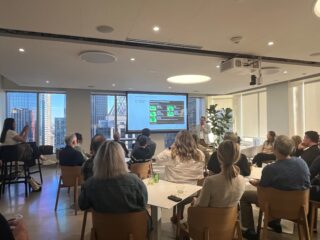
On October 15, we partnered with MillerKnoll to sponsor a CoreNet Global Washington State Chapter event at Perkins&Will, bringing together industry professionals for an evening with Ryan Anderson, MillerKnoll's VP of Global Research and Planning.
Live jazz from three University Prep students set the tone. Then, instead of a traditional presentation, Anderson invited attendees to discuss questions at their tables and share their perspectives with the room. It was a fitting format for a conversation about human connection, and one idea stuck with us: as technology evolves, connection at work is becoming more valuable, not less.
The research shared raised an interesting question, is loneliness more about where people work, or what happens when they're there? Employees can feel isolated whether they’re remote, hybrid, or in the office. Sharing a building doesn’t guarantee meaningful interaction. As AI becomes part of daily work, that question matters even more.
According to PwC's 2026 Global Workforce Hopes and Fears Survey, 64% of workers surveyed reported using AI at work in the past year. Meanwhile, research from Upwork found that among employees reporting the greatest productivity gains from AI, 67% said they trusted AI more than their coworkers. These findings don’t show that AI causes disconnection, but they raise a fair question about balancing productivity with the relationships that make work meaningful.
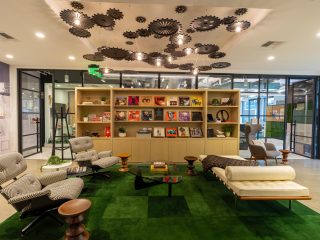
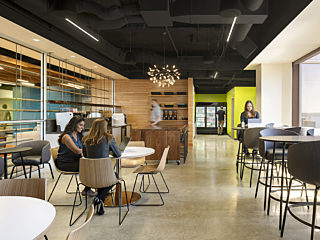
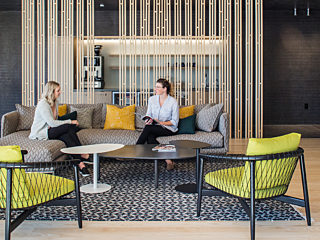
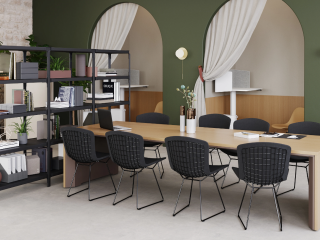
For workplace design, that means choosing furniture and layouts that make connection easy. Lounge seating grouped for conversation invites people to linger. Tables sized for small teams pull people out of heads-down routines. Movable pieces let a space shift from focused work to mentoring to brainstorming in minutes. The event itself showed what that looks like, a room full of people talking with each other.
Designing Workplaces Around Real Employee Behaviors
These conversations connect to something we’ve been exploring in our own learning sessions: the gap between how workplaces are designed and how people actually use them.
In a recent continuing education session, How We Are Getting Workplaces Wrong, we looked at how unwritten norms and everyday habits reveal needs that may not surface during planning. An informal seating area becomes a favorite spot for new hires to meet colleagues. A conference room gets rearranged week after week for hands-on collaboration. Each one tells us something about what people value.
In a recent episode of MillerKnoll's About Place podcast, Ryan Anderson speaks with Mark Bryan, Chief Research and Strategy Officer at IIDA, about strategic foresight. As Bryan puts it, “It’s really about preparedness, not prediction.” He also describes continuity management, regularly checking how well a space serves the people using it. That could mean gathering employee feedback, reconfiguring existing furniture, or choosing adaptable wall solutions that let a space evolve without a major renovation.
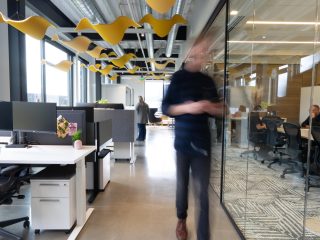
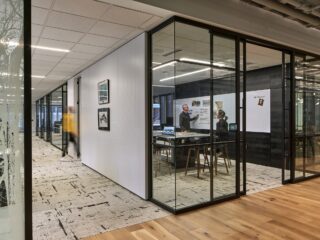
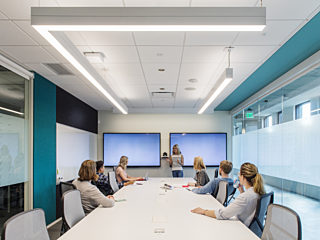
We've seen the value of thinking ahead on our own projects, including Arm's Seattle office, where we worked with the project team to create a variety of settings for focused work and collaboration, with flexibility for the growing engineering team.
Future-proofing isn't about knowing exactly what a workplace will need ten years from now. It's about asking better questions today, creating room for the answers to change, and continuing to ask those questions long after the install is complete.

